
The Truth About Roof Rakes: Are You Damaging Your Shingles by Clearing Snow?
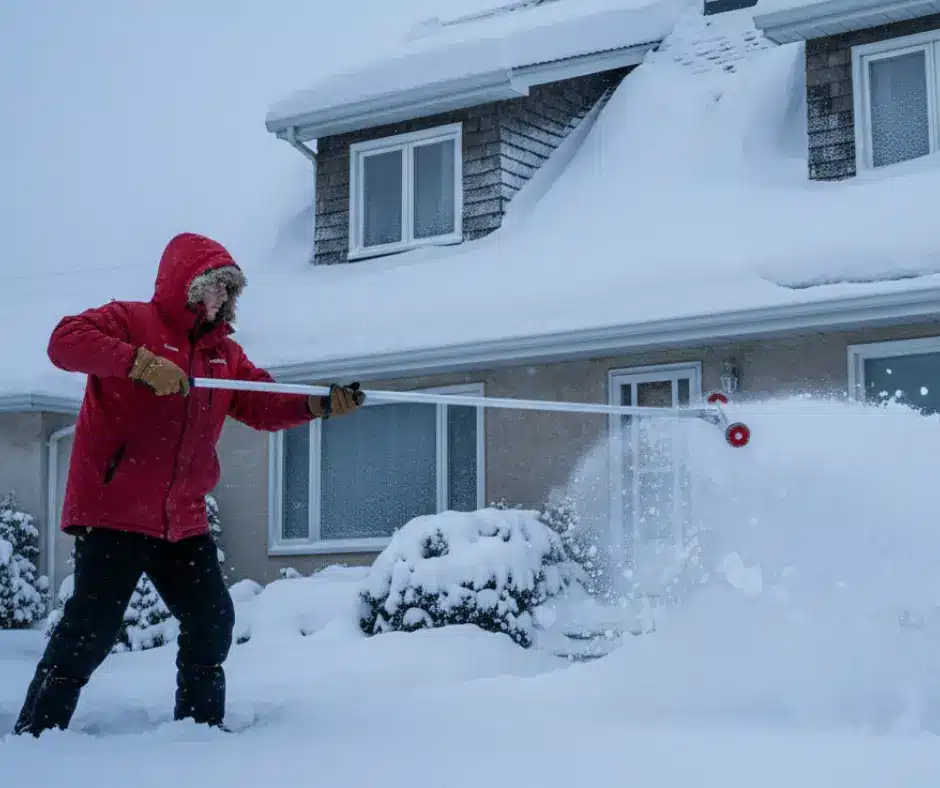
You just finished shoveling your driveway. Now you’re staring up at three feet of heavy snow sitting on your roof. Your neighbor swears by his roof rake. You bought one last year but never used it. Should you start pulling snow down yourself?
The answer isn’t simple. Roof rakes can protect your home from ice dams and excess weight. They can also tear off shingles, crack sealant strips, and cost you thousands in repairs.
We’ll show you exactly when to use a roof rake, how to do it without causing damage, and when you need to call someone who knows what they’re doing.
Why Winnipeg Homeowners Worry About Roof Snow
Your roof handles snow differently from roofs in Vancouver or Toronto. Winnipeg’s winters dump an average of 110–130 centimeters of snow between November and March. Temperatures swing from -30 to +5 degrees in the same week. This creates the perfect conditions for ice dams.
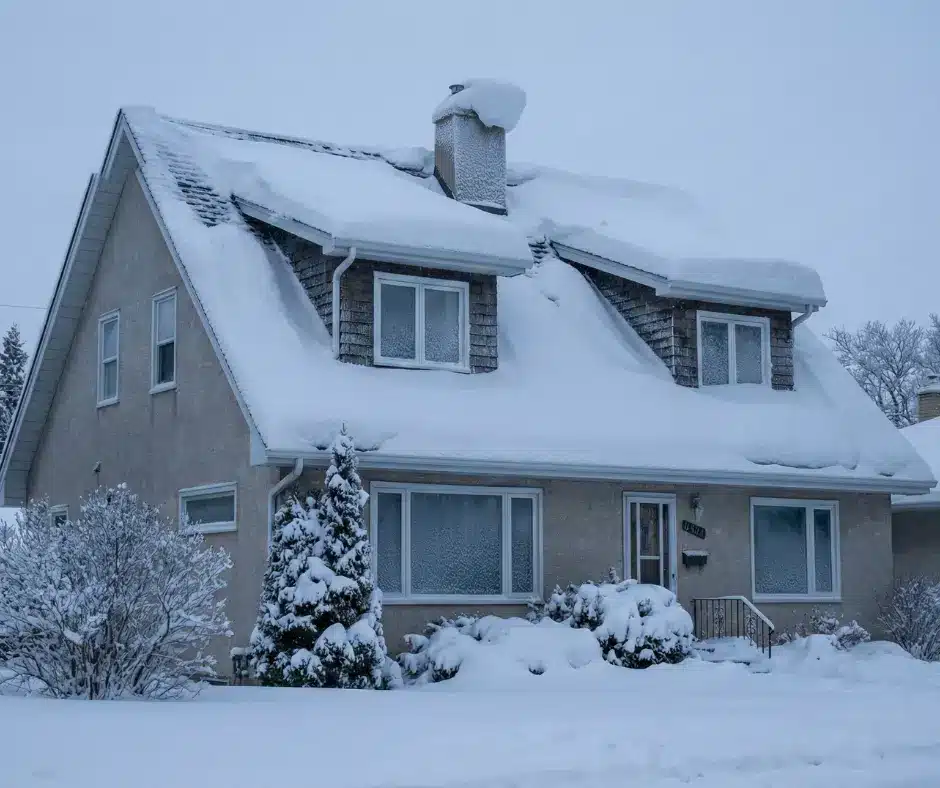
Heavy snow loads can stress older roof structures. Fresh, fluffy snow can be as light as about 7 lb per cubic foot, while wet, dense snow can be several times heavier. When 18 inches of wet snow sits across a 1,500-square-foot roof, you’re looking at 18,750 pounds of extra weight.
Many residential roofs in Winnipeg are built to handle snow loads of around 35 pounds per square foot or more, and modern homes often exceed that. Your roof can probably take the weight. The real problem is ice dams forming at the eaves.
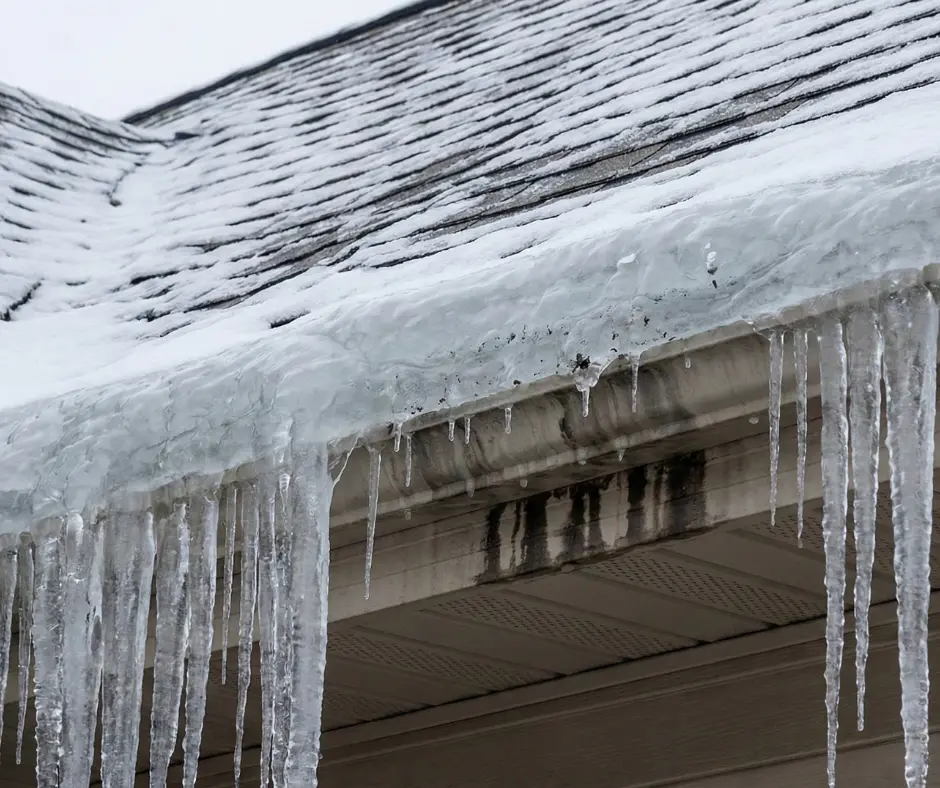
Ice dams happen when heat escapes through your roof, melts the bottom layer of snow, and sends water sliding down to your cold eaves. The water refreezes. It builds up. Eventually, it forces its way under your shingles and into your home.
This is where roof rakes come in. Remove the snow before it melts, and you prevent the dam from forming.
What a Roof Rake Actually Does
A roof rake is a long aluminum pole with a wide blade or panel at the end. You stand on the ground and drag snow off your roof edge. Most rakes extend 16 to 21 feet. The blade measures 16 to 24 inches wide.
Quality roof rakes have wheels or rollers on the blade. These keep the metal edge from scraping directly against your shingles. Cheaper models use a flat blade with no protection.
The goal is to remove 3 to 4 feet of snow from your roof edge. This creates a cold zone where melting snow can drain off without refreezing. You don’t need to clear your entire roof. You only need to clear the bottom section of your roof.
How Roof Rakes Damage Shingles
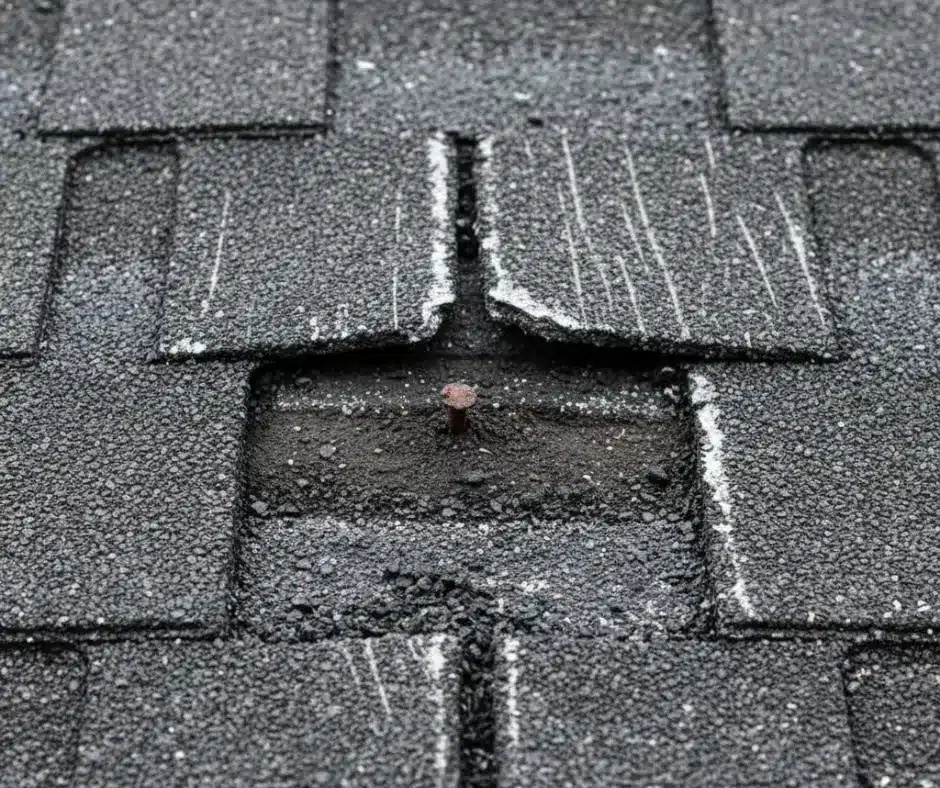
Here’s what most homeowners don’t realize. Asphalt shingles are designed to stay put. They have a sealant strip that bonds each shingle to the one below it. Cold temperatures make this bond stronger. When you drag a metal blade across frozen shingles, you can rip them right off.
We’ve seen roofs with entire rows of shingles torn away after aggressive raking. The homeowner thought they were preventing damage. Instead, they created it.
Common damage from improper roof rake use includes:
- Lifted or torn shingles along the roof edge
- Broken sealant strips that lead to wind damage later
- Scratched or gouged shingle surfaces
- Bent or damaged drip edge and flashing
- Dislodged granules that shorten shingle lifespan
The colder it gets, the more fragile your shingles become. At about -20 degrees, asphalt shingles are brittle. They crack easier. They break when bent. A roof rake dragged too hard can snap them.
Safe Roof Snow Removal: Step by Step
If you’re going to use a roof rake, follow these steps exactly. Skip one, and you risk damage.
Before You Start
Check your roof type. Roof rakes work best on asphalt shingle roofs with a standard pitch of 4:12 to 8:12. If you have metal roofing, cedar shakes, or a flat roof, don’t use a standard roof rake. You need different tools or professional help.
Look at your shingles from the ground. Are they curling, cracked, or missing granules? Old or damaged shingles are more likely to tear during raking. If your roof is over 20 years old, consider calling a professional instead.
Buy a roof rake with wheels or rollers. Spend the extra $30. Your shingles are worth it.
The Right Technique
Start at the edge and pull straight down. Don’t angle the rake or twist it sideways. The blade should stay flat against the roof surface.
Pull gently. You’re not scraping ice off a windshield. Use smooth, controlled movements. If you hit resistance, stop. Don’t force it.
Remove only the bottom 3 to 4 feet of snow. You’re creating a barrier zone, not clearing the whole roof. The upper sections can stay covered.
Work in small sections. Clear 4 feet of the edge, move over, and clear the next 4 feet. Don’t try to drag a 20-foot section at once.
Never rake upward. Always pull down toward the eave. Pushing snow up can force it under your shingles.
What to Avoid
Don’t rake in extreme cold. When temperatures drop below about -25 degrees Celsius, your shingles are too brittle. Wait for a warmer day.
Don’t scrape down to bare shingles. Leave an inch or two of snow as a buffer layer. This protects the shingle surface from direct contact with the rake blade.
Never use a shovel or garden rake. These tools have sharp edges designed for digging, not roofing. They will damage your shingles.
Don’t stand directly under where you’re raking. Snow and ice chunks will fall. Wear a hard hat if you have one. At a minimum, wear a winter hat and stay alert.
When You Should Not Use a Roof Rake
Some situations require professional help. Trying to handle these yourself can lead to injury or serious damage.
Ice Has Already Formed
If you see thick ice buildup at your roof edge, a roof rake won’t help. You need careful ice removal with steaming equipment. Chipping away ice with any tool will damage shingles, flashing, and gutters.
We remove ice dams using low-pressure steam. It melts the ice without applying force to your roof. This process takes specialized equipment and training.
Your Roof Is Too Steep or Too High
Most roof rakes extend 20 feet. If your roof peak is higher than that, you can’t reach it safely from the ground. Steep roofs above an 8:12 pitch are also difficult to rake without pulling shingles.
You Can’t See What You’re Doing
Raking in the dark or during heavy snowfall is dangerous. You can’t see damaged shingles, hidden obstacles, or power lines. Wait for daylight and clear conditions.
Snow Is Wet and Heavy
Wet spring snow weighs three times more than fresh powder. A roof rake filled with 40 pounds of wet snow is difficult to control. You’re more likely to yank too hard and damage shingles.
Heavy, wet snow also signals a bigger problem. If your attic insulation and ventilation are proper, snow shouldn’t be melting and refreezing. You may need an attic assessment before next winter.
The Real Cost of Roof Rake Damage
We inspected a home in River Heights last March. The owner had been diligently raking his roof all winter. He called us because his bedroom ceiling had water stains.
We found 40 shingles torn or lifted along both roof edges. The exposed nail holes let water in during the spring thaw. Repairs cost him $2,800. His roof was only 8 years old. It should have lasted another 15 years without issues.
Compare that to professional snow removal. Most Winnipeg roofing companies charge $200 to $400 to clear snow from a standard two-story home. If you have an ice dam, steaming services run $400 to $800, depending on severity.
You save money by preventing the damage in the first place.
When to Call a Professional
Call someone who does this every day, if:
- Ice dams have formed, and water is entering your home
- Your roof is more than two stories high
- You have a low-slope or flat roof section
- Your shingles are over 15 years old
- You see sagging or unusual dips in your roofline
- You’re physically unable to safely operate a roof rake
- Temperatures are staying below -25 degrees Celsius for extended periods
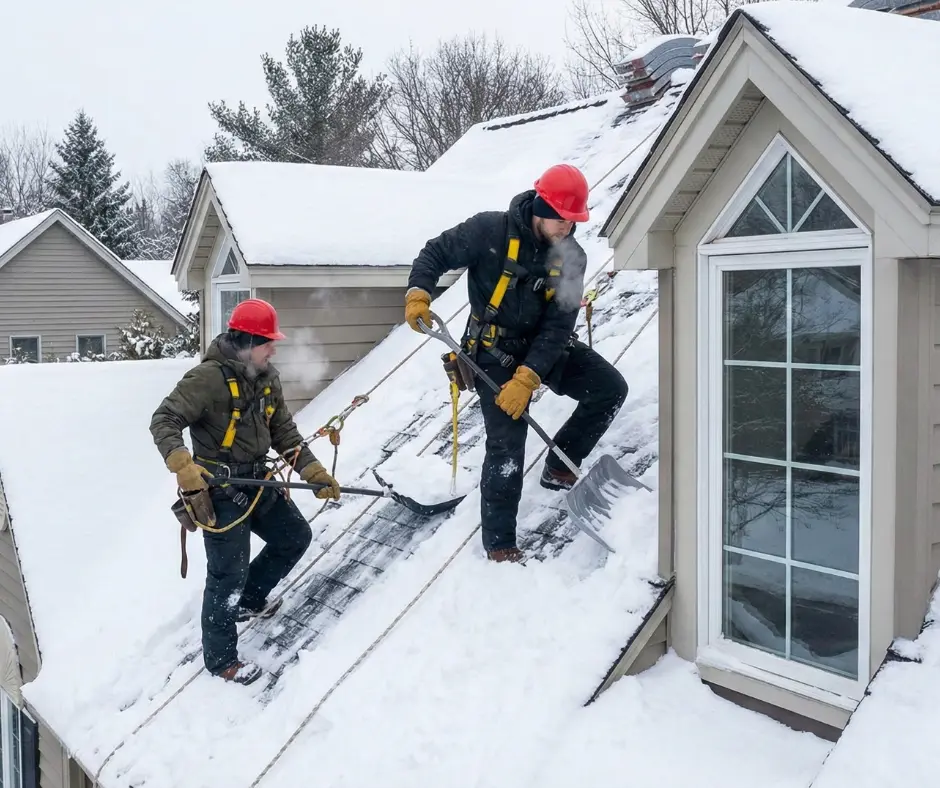
Professional snow removal crews for roofs use proper equipment, safety harnesses, and techniques that protect your shingles. We know how much weight your roof can handle. We know where the valleys and weak points are. We can spot damage before it becomes a leak.
Preventing Snow Problems Before They Start
The best defense against roof snow issues starts in your attic. Proper insulation keeps heat inside your home instead of melting snow on your roof. Adequate ventilation keeps your roof deck cold, so snow doesn’t melt in the first place.
Your attic should have:
- R-50 to R-60 insulation across the entire ceiling plane
- Continuous soffit vents along the eaves
- Ridge vents or other exhaust vents at the peak
- No gaps, compressions, or missing sections in the insulation
We see ice dam problems almost exclusively in homes with poor attic insulation or blocked ventilation. Addressing the root cause will eliminate the need to rake your roof each week.
What to Look for After Raking
After you finish raking, walk around your home and look up at the roof edge. Check for:
- Lifted or askew shingles
- Exposed nails or nail strips
- Pieces of shingles on the ground
- Damaged drip edge or flashing
If you see damage, document it with photos. Small repairs in spring prevent big leaks later. Most shingle repairs cost $150 to $400 if handled quickly.
The Role of Gutters and Heat Cable
Clean gutters help prevent ice dams by letting water drain away from your roof. Clogged gutters trap water, which freezes and backs up under your shingles.
Heat cable can help in problem areas, but it’s not a complete solution. A cable installed along the roof edge melts a channel through the ice. This gives trapped water an escape route. However, heat cable uses electricity and won’t prevent ice dams if your attic ventilation is poor.
We install heat cable for clients who have recurring ice dam problems while we schedule attic insulation upgrades. It’s a temporary fix, not a permanent solution.
Understanding Your Roof’s Snow Capacity
The Manitoba building code requires residential roofs to handle a snow load of 1.7 kPa, which translates to roughly 35 pounds per square foot. Most modern homes are built to exceed this standard.
Your roof structure includes:
- Rafters or trusses spaced 16 or 24 inches apart
- Roof sheathing, typically 5/8-inch plywood or OSB
- Underlayment and shingles
This system can handle significant weight. Problems occur when snow accumulates unevenly, creating point loads in valleys or against dormers. They also occur when ice dams add weight and force water under shingles.
If you observe your ceiling drywall bowing, cracks forming near interior walls, or doors sticking in their frames during winter, it could indicate an overloaded roof. Call a professional immediately.
Timing Your Snow Removal
You don’t need to rake after every snowfall. Wait until you have 12 inches or more of accumulation. Then check your roof edge for ice buildup.
The ideal time to rake is after a fresh snowfall, before temperatures rise and fall. Fresh snow is light and easy to remove. It hasn’t started the melt-and-refreeze cycle yet.
In Winnipeg, late February and early March are the highest-risk periods for ice dams. Daytime temperatures climb above freezing while nights stay cold. This cycle creates the perfect conditions for ice buildup.
Alternatives to Roof Rakes
If you’re uncomfortable using a roof rake, or if your roof isn’t suitable for raking, consider these options.
Calcium chloride ice melt can be placed in a tube sock and laid across an ice dam. The chemical melts a channel through the ice. This solution works for small ice dams but won’t remove heavy snow.
Professional snow removal services use specialized tools and safety equipment. We can clear your entire roof if needed, not just the edges.
Improving your attic insulation and ventilation prevents the problem at the source. This is the most effective long-term solution.
Frequently Asked Questions
How often should I rake snow off my roof during winter?
Rake your roof when snow accumulation reaches 12 inches or more and when you see ice forming at the edges. You typically need to rake 2 to 4 times per winter in Winnipeg. Don’t rake after every snowfall. Wait for significant accumulation. Fresh snow under 6 inches rarely causes problems. Watch for signs of ice dams, such as icicles larger than 6 inches or water stains appearing on your eaves.
Can I use a roof rake on any type of roof?
No. Roof rakes work best on asphalt shingle roofs with slopes between 4:12 and 8:12 pitch. Do not use standard roof rakes on metal roofing, cedar shakes, slate, tile, or flat roofs. These materials require different tools or professional removal. Metal roofs can be scratched or dented. Cedar shakes and slate are brittle and break easily. Flat roofs need specialized equipment to avoid membrane damage.
What temperature is too cold to rake my roof?
Stop using a roof rake when temperatures drop below about -25 Celsius. At these extreme temperatures, asphalt shingles become brittle and crack easily. The sealant strips that hold shingles down freeze solid. Even gentle raking can tear shingles or break them. Wait for warmer weather, or call a professional who has experience working in extreme cold conditions.
Making the Right Choice for Your Roof
Roof rakes are useful tools when used correctly. They can prevent ice dams and water damage. They can also destroy your shingles if you’re too aggressive or use them in the wrong conditions.
Most Winnipeg homeowners can safely remove light snow from their roof edges with proper technique. If you have concerns about your roof age, your physical ability to rake safely, or existing ice dam problems, call someone who handles these situations daily.
Your roof is your home’s first defense against Winnipeg winters. Protecting it means knowing when to act and when to ask for help. A few hundred dollars for professional snow removal beats thousands in shingle replacement.
If you’re not certain about the condition of your roof, schedule an inspection before next winter. We’ll identify weak points, check your attic ventilation, and give you a clear picture of what your roof can handle. Then you can make informed decisions about snow removal instead of guessing.
Leave a Reply
You must be logged in to post a comment.